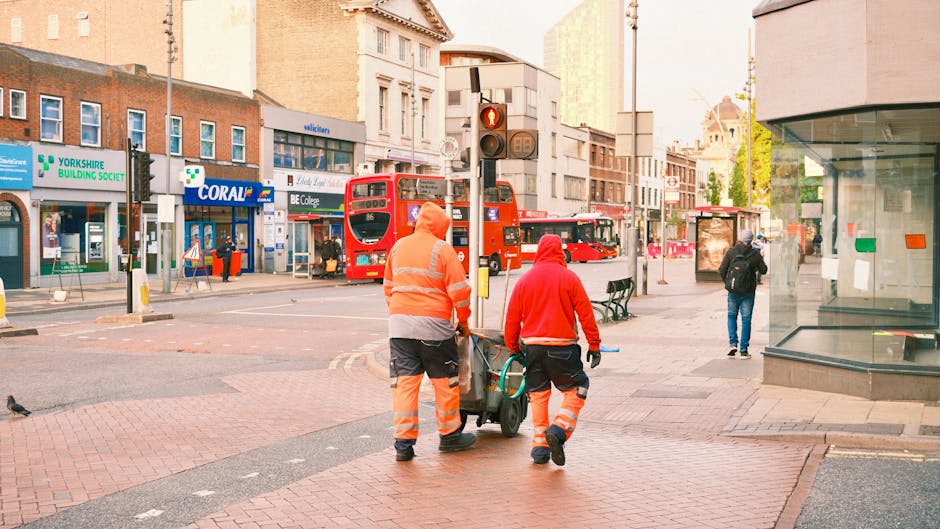
What to know about access problems for Ealing rubbish teams
Posted on 08/10/2026
If you have ever stared at a blocked alleyway, a tight staircase, or a car parked right across the front of a property and thought, "Right, that's going to be awkward," you already understand the heart of What to know about access problems for Ealing rubbish teams. Access issues are one of the most common reasons a rubbish collection or clearance takes longer than expected, costs more than planned, or needs an adapted approach on the day.
In Ealing, this can mean anything from narrow side returns and basement steps to controlled parking bays, shared entrances, low bridges, lift restrictions, or a garden that only seems reachable by threading bins through the house. Sounds simple until you try moving a wardrobe down a corridor that barely turns on the corner. This guide explains what access problems are, why they matter, how rubbish teams usually handle them, and what you can do to make the job smoother. No fluff, just the practical stuff that saves time and stress.
Why access problems matter
Access problems matter because rubbish removal is physical work, and physical work depends on clear routes, safe lifting space, and realistic loading conditions. If a team cannot park close enough, cannot reach a bin store, or cannot safely carry items from a top-floor flat, the job changes. Sometimes it changes a little. Sometimes it changes everything.
For customers, the impact is usually straightforward: longer labour time, more planning, and possibly extra handling. For the team, it is about safety, efficiency, and making sure the clearance is done without damage to walls, floors, stair rails, or the items being removed. Nobody wants to discover, halfway through, that the only route out involves a very heavy sofa and a staircase that feels two inches narrower than it looked in the photos.
In Ealing, access issues often crop up in older housing, terraces with tight front paths, shared driveways, converted flats, and commercial premises tucked behind other buildings. That local mix makes access planning more important than people expect. A job that looks neat and simple from the street can be surprisingly tricky once you walk inside.
Key point: access problems do not automatically stop a clearance. They just need to be identified early so the right crew, vehicle, and method can be used.
How access problems are handled
Good rubbish teams usually deal with access in stages. First comes the initial assessment, which may happen through photos, a phone call, or an in-person visit. Then comes the route planning: where the vehicle can park, which doors or gates will be used, whether items need to be broken down, and how long the job is likely to take. Pretty ordinary on paper. In practice, this is where the job either runs smoothly or gets awkward fast.
A professional team will usually ask questions such as:
- How close can a vehicle get to the property?
- Are there steps, lifts, narrow hallways, or tight corners?
- Is access shared with neighbours or other tenants?
- Are there parking restrictions outside?
- Are large items already dismantled, or do they need to come out in one piece?
From there, the team can decide whether standard loading is possible or whether more manual handling is needed. In some situations, the job may require extra labour, smaller vehicles, split loads, or a different arrival time to work around traffic or building access windows. That is normal, not a sign of trouble.
If you are comparing rubbish services, it helps to understand that access-sensitive work is not the same as a quick kerbside collection. It is closer to a planned move-out, only with waste, old furniture, or mixed household items. That is why pages such as the services overview can be useful when you are trying to match the job to the right type of removal.
And yes, the devil is in the details. A single locked gate or low branch can turn a ten-minute handover into a much longer shuffle. Happens all the time.
Key benefits and practical advantages
Planning for access problems gives you more than convenience. It gives you control over the job. That is the real win.
- Fewer delays: Teams can arrive prepared instead of working out the plan on the pavement.
- Better pricing accuracy: If access is tricky, the quote can reflect the real work required rather than a guess.
- Less damage risk: Clear routes reduce the chance of scuffed walls, broken banisters, and scraped furniture.
- Safer lifting: Knowing the route in advance helps the team move items without rushed or awkward handling.
- Cleaner completion: A smooth removal often means less disruption to neighbours, residents, or staff.
There is also a quieter benefit: confidence. When access has been properly discussed, you are not waiting around wondering whether the team will manage the job. You know what is happening and why. That matters, especially if you are clearing a home under time pressure or managing a business premises where people need the space back quickly.
For example, a top-floor flat in Ealing Broadway with no lift may still be perfectly manageable if the route is clear and the items are sensible to carry. By contrast, a ground-floor property with a locked rear passage and a heavy garden shed may be more awkward than it first appears. The headline is simple: access planning prevents surprises.
Who this is for and when it makes sense
Access planning matters for more people than you might think. It is not just for big commercial clearances or complicated hoarder-type jobs. If the item is bulky, the route is tight, or the property has shared entry points, you should think about access early.
This is especially relevant if you are:
- clearing a flat with stairs or limited lift access
- moving bulky furniture out of an older terraced property
- disposing of builders' waste from a rear garden or side return
- arranging an office clearance in a building with security access
- removing white goods from a basement kitchen or utility room
- dealing with a house, loft, or garage that has narrow entrance points
It also makes sense for landlords, letting agents, facilities managers, and homeowners who know the property has awkward access but are not sure how much it matters. Truth be told, if you have to ask whether access is an issue, it usually is. Not always, but usually.
Some customers assume a rubbish team will simply "work around it". Sometimes they can. Sometimes they can't. The difference often comes down to whether the challenge was described clearly at the start. That first call or message can save a lot of back-and-forth later.
If you need a broader picture of the types of clearance available, the waste clearance service in Ealing is a useful starting point for understanding the scope of work. It gives context before you get into the practicalities of access.
Step-by-step guidance
If you want a smooth removal, the best approach is to treat access as part of the booking, not as an afterthought. Here is a practical process that works well.
- Walk the route from the item to the vehicle. Start where the rubbish is and trace the full path out. Doorways, steps, gates, turns, lifts, and parking all matter.
- Measure anything obviously tight. A few quick measurements of doors, hallways, or large items can prevent a lot of guesswork. Even a rough tape measure check helps.
- Take clear photos. A photo of the item, the access route, the stairs, and the parking spot gives the team a far better idea than a vague description.
- Flag restrictions early. Mention timed entry, concierge rules, permit parking, school-run congestion, or neighbour-only access. These details change the plan.
- Ask how the team will handle bulky items. Some loads can be dismantled. Others need two-person lifting or specialised handling. Best to know before the day.
- Confirm where the vehicle can stop. Even a short carry distance can affect time and labour, especially if there are multiple flights of stairs.
- Prepare the route before arrival. Move pets, unlock gates, clear tripping hazards, and make sure the team can get in without knocking on three doors first.
One small thing that helps a lot: label what is going and what is staying. It sounds obvious, but on a busy day, obvious things have a habit of disappearing. A strip of tape or a simple note can stop confusion in its tracks.
For larger household projects, such as loft work or mixed-item clearances, you may also want to read about loft clearance in Ealing or house clearance services. Both involve access considerations that are easy to underestimate at first glance.
Expert tips for better results
After enough clearances, a pattern becomes obvious: the jobs that run smoothly are usually the ones where someone did a little extra thinking beforehand. Nothing dramatic. Just proper planning. Here are the tips that make the biggest difference.
- Give the worst-case version of access, not the optimistic one. If parking is sometimes available but often blocked, say so.
- Send photos taken from the team's point of view. Stand where the vehicle would stop and look toward the entrance.
- Be honest about item sizes. "A medium sofa" is not the same as a deep three-seater with fixed arms.
- Check for hidden access blockers. Bin stores, locked yards, coded gates, and internal fire doors can matter more than the front entrance.
- Plan around busy local traffic. In places like Ealing, school runs, commuter traffic, and delivery vans can all affect arrival and loading.
If a job is likely to involve heavy lifting or awkward routes, it can help to ask whether the service includes the right level of insurance and handling process. That is one reason many customers look at insurance and safety information before booking. It is not about overthinking things; it is about knowing the team takes the job seriously.
A small aside: the fastest way to ruin a clearance day is to assume "it'll be fine" and then discover the lift is out of order. It happens. More often than people admit.

Common mistakes to avoid
Most access problems are manageable. The real trouble comes from avoidable mistakes. These are the ones that cause the most friction.
- Leaving access details out of the booking. If the team does not know about the stairs, gate code, or parking issue, they cannot plan for it.
- Assuming the crew can enter anywhere. Shared buildings, managed estates, and commercial sites often have rules.
- Ignoring item dimensions. Large wardrobes, mattresses, or appliances are the usual troublemakers.
- Not clearing the route. Shoes, bikes, plant pots, and loose cables can turn into trip hazards in seconds.
- Forgetting about neighbour access. If a shared passage is blocked by another resident's belongings, that can delay the job.
- Booking at the wrong time of day. A clear road at 9:30 a.m. may be a pain by 4:30 p.m.
There is also a softer mistake: under-communicating because you do not want the job to seem difficult. To be fair, people do this all the time. They worry they are being awkward. But a good rubbish team would much rather hear the awkward detail before arrival than discover it while trying to manoeuvre a fridge through a hallway that turns like a snake.
If your clearance involves specialist items, such as broken appliances or trade waste, it is worth reviewing the relevant disposal pages too, including appliance disposal and builders' waste disposal. Access problems often show up differently depending on what is being removed.
Tools, resources and recommendations
You do not need fancy equipment to solve access problems, but a few simple tools make planning much easier. A tape measure, phone camera, torch, and a notepad are often enough. If you are managing a more complex site, a floor plan or building access note can also help. Nothing glamorous. Very useful though.
Here are the most practical resources to have ready:
- Photos of the route: doorways, stairs, lifts, and the parking area.
- Basic measurements: especially for large furniture, fridges, wardrobes, and sheds.
- Gate codes or entry instructions: if they are needed, have them to hand.
- Building rules: useful for flats, offices, and managed premises.
- Item list: helps the team judge weight, size, and handling needs.
For pricing, it often helps to review a service's quote process in advance. Pages like pricing and quotes and rubbish collection in Ealing can help you understand how access may affect the estimate and what information you should supply.
If your concern is mainly about household furniture, you may also find the dedicated furniture removal and furniture disposal pages useful. For garden jobs, garden waste removal is the better fit, especially where rear access is tight.
Law, compliance, standards, or best practice
Access problems are not just a logistics issue. They can touch on safety, waste handling, and property rules. In the UK, rubbish and clearance work should be carried out with proper care, safe handling, and responsible waste transfer. You do not need to become a compliance expert to book a service, but it does help to know the basics.
In practical terms, good practice usually means:
- using safe manual handling methods
- protecting buildings from avoidable damage
- respecting access rules for private or shared property
- making sure waste is moved and managed by an appropriately licensed operator
- separating recyclable material where possible
For that reason, it is sensible to review a provider's compliance information before booking. The pages on waste carrier licence and compliance, recycling and sustainability, and terms and conditions are useful touchpoints if you want reassurance about how the job is handled.
If you are booking for a business, office, or managed site, compliance becomes even more important because access arrangements may involve building managers, loading bays, or security procedures. That is where clear communication really earns its keep.
Options, methods, or comparison table
Different access problems need different solutions. There is no one-size-fits-all answer, which is a bit inconvenient, but that is the reality. The table below shows the most common approaches and when they tend to work best.
| Access situation | Best approach | What to watch for |
|---|---|---|
| Narrow hallway or staircase | Two-person carry, dismantling, protective handling | Scrapes, turns, and weight distribution |
| No nearby parking | Extra carry distance planning, adjusted schedule | Time, labour, permit restrictions |
| Shared entrance or coded gate | Pre-arranged access instructions | Delays at the door, neighbour disruption |
| Flat with lift restrictions | Timing around lift use, careful item breakdown | Lift size, loading limits, service outages |
| Rear garden or yard access only | Route clearing, smaller items moved first | Mud, steps, narrow side passages |
| Commercial premises with security rules | Advance sign-in and site contact coordination | Waiting time, access windows, site restrictions |
For some jobs, a mixed approach is best. A sofa might be dismantled, while lighter bags are carried out in batches. For others, the smartest move is simply choosing a time when the entrance is less busy. That might sound basic, but basic often works.
Case study or real-world example
Here is a realistic example based on the kind of access issue that comes up often in Ealing.
A customer in a converted flat arranged a clearance for several bulky items: a wardrobe, a mattress, a chest of drawers, and some mixed household waste. At first glance, the job seemed straightforward. The property was ground floor, and the street was close enough for a vehicle to stop nearby. But the route to the front door involved a narrow shared passage, a tight turn by the bins, and a neighbour's bicycle that had been left half across the path.
Because the access problem was flagged early, the team arrived expecting a slower carry route. They brought the right number of staff, protected the wall corners, and moved the bicycle only after checking it was okay to do so. The clearance still took longer than a simple curbside pickup, but it finished without damage or drama. Most importantly, the customer was not left feeling that the job had "gone wrong". It just needed a better plan.
The same sort of thing happens with office clearance in Ealing or commercial waste removal, where access may depend on lifts, reception staff, loading bays, or timed entry. In a business setting, five minutes of confusion can feel like a small eternity.
The lesson is simple: when access is discussed properly, awkward does not have to mean difficult.
Practical checklist
Use this checklist before your rubbish team arrives. It is quick, but it catches most of the usual headaches.
- Have I told the team about stairs, lifts, gates, and narrow passages?
- Have I sent photos of the items and the access route?
- Do I know where the vehicle can park?
- Are there any time restrictions, permits, or building rules?
- Are the items too large to fit through any doorway or turn?
- Have I cleared trip hazards, bikes, bins, and loose objects?
- Do I need to warn neighbours or a building manager?
- Have I checked whether any items need dismantling first?
- Is there a backup contact if entry depends on someone else?
- Do I understand whether the clearance is household, furniture, garden, or trade-related?
Practical summary: the more accurately you describe the access, the less likely you are to get surprise delays or awkward on-the-day decisions. That one habit saves time, effort, and a fair bit of stress.
Conclusion
Access problems for rubbish teams in Ealing are common, but they are rarely a deal-breaker. Most can be handled with a little planning, a few honest details, and the right crew on the day. Whether you are clearing a flat, removing old furniture, emptying a loft, or dealing with a business premises, the real goal is the same: safe movement, clear communication, and a job that gets finished without fuss.
If you remember only one thing, make it this: tell the team what the route actually looks like, not what you hope it looks like. That small bit of realism usually pays off.
Get a free quote today and see how much you can save.
And if the route is awkward, that is alright. A good plan can still make it a smooth day.